

Let's explore how to use AI to boost profits with the example of Matcha Whisk Sets. The demand for this product is growing at an average rate of 25% per year, with the current volume of key searches for "Matcha Sets" at 90,500 queries per month. Sales are evenly distributed (3,000 units/month per seller), and there is no dominant seller in the market.
This product can be sold for $35, with a cost price of $11 (including shipping to the US). After deducting Amazon and FBA fees, the net profit per sale is approximately $15-20. If we consider a small batch of 100 units, investing $1,100 in production and shipping, plus $700–900 in fees, and selling the product for $3,500, you can earn a net profit of $1,500 with a 100% ROI.
Below are the TOP 5 AI tools that can help you:
1. AI for Product Feature Improvement
The more positive reviews you receive, the better your product sells, as it builds buyer trust. AI from Supply Leader (available in every plan) helps improve products by analyzing competitors' negative reviews. It collects reviews rated 1–3 stars, identifies key complaints (e.g., poor quality or inadequate packaging), and creates an "improvement plan" that can be sent to the manufacturer.
For example, for Matcha Whisk Sets, the analysis revealed issues such as material defects, design flaws, and unreliable packaging. By implementing AI recommendations (improving materials, enhancing quality control, upgrading design, and packaging), you can create a product that garners higher reviews and, consequently, sells more effectively.
2. AI for Branding and Logo Creation
Use the free service Namelix to generate a brand name and logo based on keywords. Simply input 3 main keywords. For instance, for our product, the AI suggested the following option: Senka.
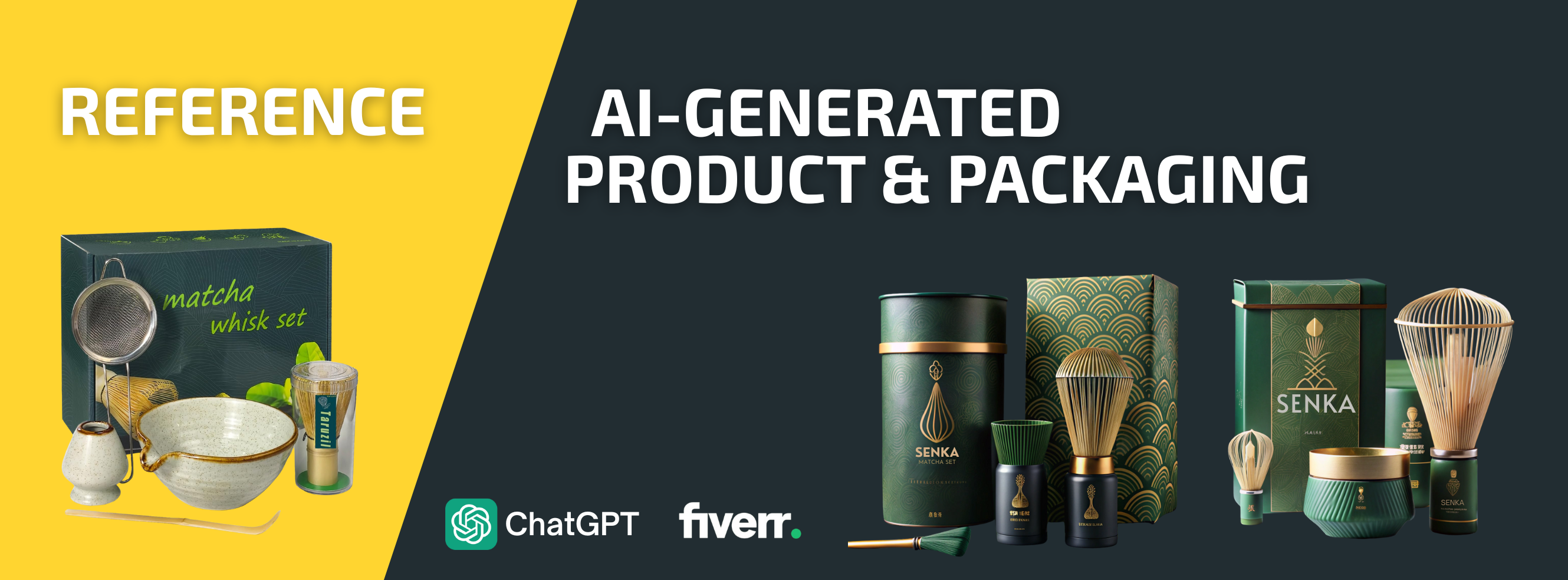
3. AI for Product Images or References
For visualizing packaging and the product itself, use neural networks like MidJourney to create realistic product images. For example, a prompt for a Matcha Whisk Set under the brand "Senka":
"Create a packaging design for a premium Matcha Whisk Set under the brand name 'Senka.' The packaging should feature a minimalist design with dark, elegant colors such as deep green, black, and gold. The design should include Japanese cultural elements like the rising sun or traditional patterns, emphasizing the product's eco-friendliness with subtle natural motifs like bamboo or leaves. The box should have a glossy finish to convey luxury and sophistication. The brand name 'Senka' should be prominently displayed in an elegant, modern font. The overall design should evoke a sense of tradition, purity, and high quality, appealing to a premium market segment"
As a result, you get high-quality references. To finalize, hire a freelancer ($15–50) to refine the logo and create product cards. Many competitors overlook packaging details, which provides an opportunity to stand out with premium design and customization, simplified through Supply Leader’s "Private Label" feature.
4. AI for Product Listing Optimization and Description Creation
With tools like ChatGPT, Listify GPT, and Datadive, you can quickly create keyword-optimized titles, bullet points, and descriptions for your listing. For example, using the following prompt:
"You are an expert in creating high-converting product listings for Amazon. Your task is to write 3 optimized versions of effective product listings, which include:
Product Title: Optimized with high-volume keywords such as "Matcha Bowl And Whisk," "Matcha With Whisk," and "Matcha Utensils."
Product Description: A compelling and persuasive text that highlights the product's unique features, usage, and benefits. Incorporate keywords such as "Bamboo Matcha Whisk," "Matcha Bowl," "Bamboo Whisk For Matcha Tea" and others to maximize search optimization.
Bullet Points (5 points): Informative, attention-grabbing, and concise points that emphasize the key features and benefits of the product. Include keyword combinations like "Matcha Chasen," "Matcha Kits," "Ceremonial Matcha Kit," and "Matcha Starter Set."
Product Context: A matcha tea preparation set that includes a bowl, bamboo whisk (chasen), spoon, and possibly other accessories. It is a premium product suitable for both beginners and experienced tea enthusiasts. It can also serve as the perfect gift.
Target Audience: Matcha tea lovers, those interested in experiencing the Japanese tea ceremony, or people looking for gifts for tea enthusiasts.
Additional Keyword Data: High-volume keywords: "Matcha Sets" (Volume: 90,500/mo), "Matcha Bowl" (Volume: 33,100/mo), "Matcha Chasen" (Volume: 5,400/mo); Low-competition keywords: "Christmas Gifts For Kitchen" (Competition: 0.25), "Matcha With Whisk" (CPC: $0.26).
Based on this information, write:
3 optimized product title variations.
3 product description variations.
3 sets of 5 bullet points.
The text should be highly compelling, SEO-optimized, and designed to convert buyers while adhering to Amazon's listing guidelines."
These tools not only improve product visibility and boost sales but also save time and reduce the likelihood of errors, even if you lack experience in crafting descriptions.
5. AI for Marketing and Promotion

When selling on Amazon, it’s crucial not only to list your product but also to make it visible. For promotion, you can use tools like:
- Opus AI for video content ($15/mo),
- Datadive for keyword analysis ($39/mo),
- MidJourney for creatives ($10/mo),
- ChatGPT for ad copy ($10/mo).
Advertising campaigns can be launched on Google or Meta using built-in AI or freelancers, while Amazon PPC requires the keyword analytics mentioned earlier. These tools help drive traffic and simplify ad management.
AI is a game-changer. With AI services, we identified, analyzed, and ordered the first batch of a product for sale on Amazon for just $1,500, with an estimated selling price of $35 per set.
By selling the first batch of 100 units, you can generate $3,500 in revenue (before marketplace fees). As order volumes increase, the cost price decreases, allowing for higher profits. This example demonstrates how AI simplifies launching a business and building a brand on Amazon.